Many people ask whether kashering a kitchen on their own is sufficient, or whether kashering performed by a trained mashgiach under proper supervision is necessary. Understanding the difference is essential.
Kashering Done Independently
When a person kasheres their own kitchen, the process usually relies on general guidelines they have learned or heard. While this may work in simple and familiar situations, it often presents challenges:
Uncertainty about the correct kashering method for each surface and appliance
Difficulty assessing previous use (temperature, food type, time factors)
Risk of missing halachic details that affect validity
No external accountability or verification
Independent kashering assumes a strong level of halachic knowledge and practical experience. In many modern kitchens—especially with mixed materials, complex appliances, or unknown prior use—this can lead to mistakes.
(If you are preparing for the upcoming Chag/vacation, read our The Complete Guide to Year-Round & Pesach Kitchen Kashering for additional step-by-step instructions).
Kashering by a Proper Mashgiach (Under Supervision)
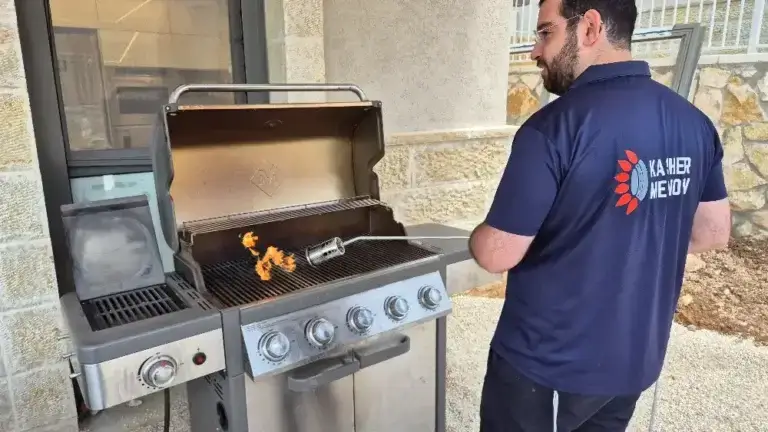
Kashering performed by a qualified mashgiach is done under clear halachic authority and supervision. This ensures:
Correct identification of materials and prior usage
Proper kashering method for each item (hag’alah, libun, irui, or covering)
Halachic verification that cleaning was done correctly (cleaning itself is not performed by the mashgiach)
Consistency with accepted kashrut standards
Responsibility and accountability for the process
A mashgiach does not rely on assumptions. Each step is evaluated and carried out according to halacha, based on the specific kitchen and its use.
(To learn more about modern countertops like Caesarstone, Corian, or granite, check out our halachic guide to kashering modern kitchen surfaces).
When Supervised Kashering Is Especially Important
Kashering under supervision is strongly recommended in situations such as:
Pesach kashering, where even minimal chametz is forbidden
Moving into a new home or rental with unknown standards
Vacation rentals, luxury apartments, and short-term stays
Kitchens with modern appliances and composite surfaces
When the kitchen will be used by guests who rely on higher kashrut standards
Peace of Mind and Trust
Beyond the technical aspects, supervised kashering provides peace of mind. You know the kitchen was kashered correctly, responsibly, and in a way that others can rely on with confidence.
(For those relocating or staying in short-term properties, explore our top tips for maintaining kashrut in vacation rentals).
Summary
While basic kashering may sometimes be done independently, proper kashering by a qualified mashgiach under supervision ensures halachic accuracy, avoids costly mistakes, and provides full trust in the kitchen’s kashrut status—especially in complex or sensitive situations.
Frequently Asked Questions (FAQ)
Can I kasher my kitchen myself, or do I need a mashgiach to supervise the process?
While basic kashering can generally be done independently, doing so properly requires a solid understanding of the relevant halachic requirements and practical experience. Therefore, it is highly recommended to consult a qualified mashgiach. A supervised kashering process helps ensure that modern composite materials, complex appliances, and previous usage are properly evaluated according to exact halachic standards, thereby avoiding common errors.
What is the difference between Hag’alah, Libun, and Irui in kitchen kashering?
These are distinct halachic methods used to purge non-kosher or chametz status based on how the vessel/Keili was used:
Hag’alah (Boiling Water): Used for items exposed to hot liquids.
Libun (Direct Fire/Heat): Used for items that came into direct contact with heat without liquid (e.g., ovens, grills).
Irui (Pouring Hot Water): Used for surfaces like sinks or countertops where hot food was poured.A trained mashgiach determines which method applies to each specific item.
Does the Mashgiach clean the kitchen before kashering it?
No. The kitchen owner is responsible for thoroughly cleaning all surfaces, ovens, and appliances prior to the mashgiach’s arrival. Halachically, surfaces must be completely clean and free of residue – and left unused with heat for 24 hours (Aino Ben Yomo) – before the physical kashering process can take place.
Why is supervised kashering especially important?
Whether you’re kashering your kitchen for Pesach or year-round, proper kashering requires careful attention to Halacha and the specific requirements of each surface and appliance. Having a qualified mashgiach oversee the process helps ensure that every countertop, oven, sink, and utensil is kashered correctly, with the appropriate halachic considerations and chumros taken into account.
How do I know if modern synthetic or composite countertops can be kashered?
Materials such as quartz composites, Caesarstone, Corian, or natural granite each have specific halachic rules regarding heat tolerance and kasherability. A professional mashgiach evaluates the precise material composition and heat rating to apply the proper method (or recommend covering if kashering is not halachically permissible).

Nachman Harris. Kosher Expert.
Available for any of your questions